Breed Education
Getting to Know the Rottweiler — Without the Myths
The Rottweiler is a large, powerful and intelligent breed with a long working history. Understanding the breed in general is useful — but the most important thing to understand is the individual dog in front of you.
General breed background
The breed is widely associated with the town of Rottweil in southern Germany, where dogs of this type were used for droving cattle and other working tasks. That heritage helps explain the breed's strength, stamina and willingness to work closely with people.
Physical characteristics
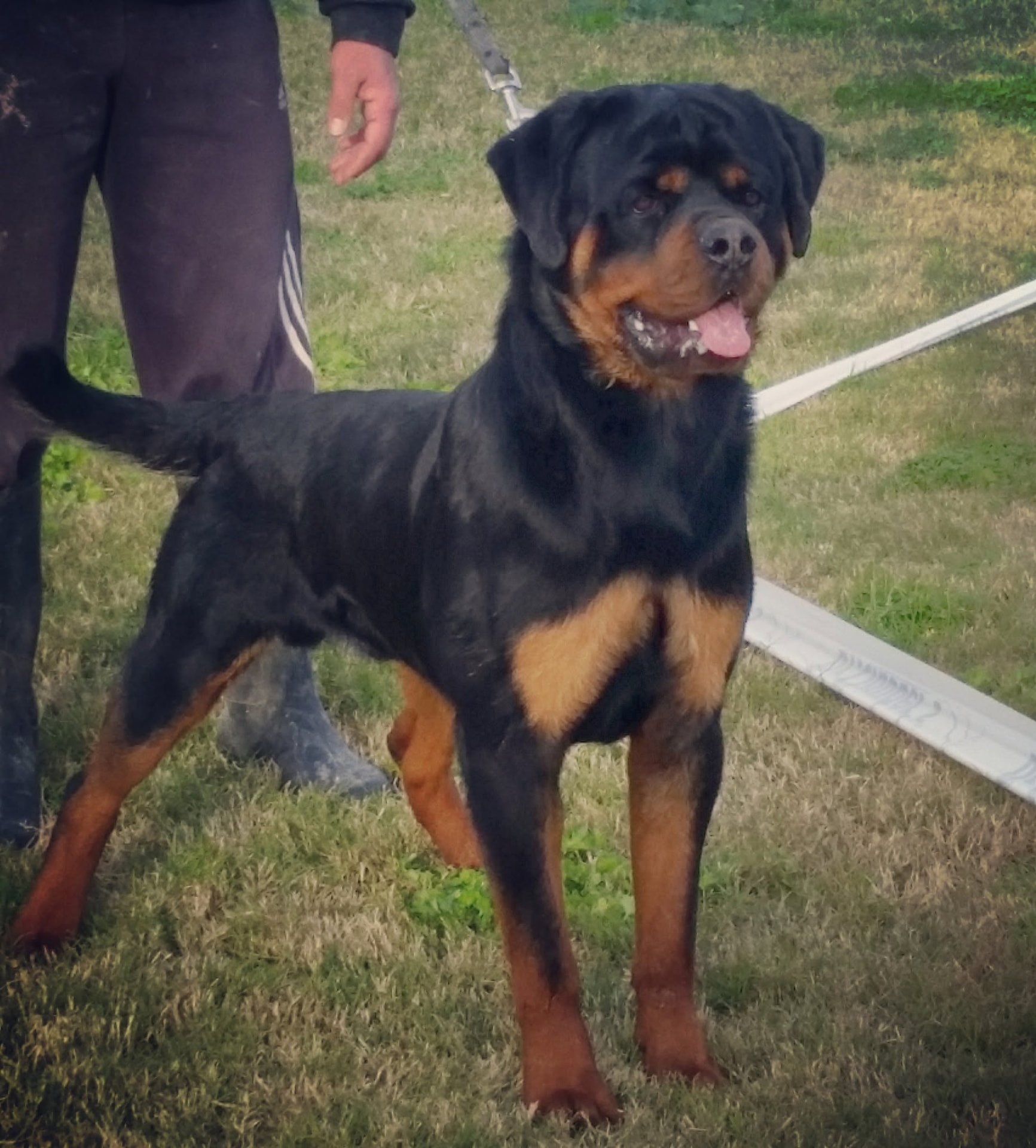
Rottweilers are medium-large to large, robust dogs with a short, dense black coat and clearly defined mahogany or rust markings on the face, chest and legs. Size and weight vary between individuals and between males and females; your veterinarian can advise what a healthy weight looks like for your dog.
Intelligence and learning
Many Rottweilers learn quickly and enjoy having a job to do. That same intelligence means they can become bored or frustrated without enough mental stimulation, and they learn bad habits as readily as good ones.
Individual temperament and variation
Temperament is shaped by genetics, early experiences, socialization, training, health and environment. Two Rottweilers can be very different. No breed description can predict how a particular dog will behave, and no dog should be judged on breed alone.
Exercise and enrichment needs
Most Rottweilers benefit from daily physical exercise alongside training games, scent work and problem-solving activities. Adjust intensity for age, health and Malta's climate.
Responsible training
Because of their size and strength, early and consistent reward-based training is especially important. Good lead manners, reliable recall in safe areas, and calm behaviour around visitors make life easier and safer for everyone.
Grooming and routine care
The short coat is relatively easy to maintain with regular brushing; shedding increases seasonally. Nails, ears and teeth also need routine attention.
Myths and misunderstandings
- Myth: Rottweilers are naturally aggressive. Reality: behaviour is individual and strongly influenced by upbringing, training and environment.
- Myth: a Rottweiler only needs a garden. Reality: they need company, training, exercise and involvement in family life.
- Myth: firmness means harshness. Reality: consistent, humane, reward-based training is both kinder and more effective.
- Myth: they are only guard dogs. Reality: many are companions and take part in a range of supervised activities.
Questions prospective owners should consider
- Do I have time every day for exercise and training?
- Can I safely handle a strong, heavy dog?
- Is my home and outdoor space secure and shaded?
- Can I afford routine and unexpected veterinary care?
- Who will care for the dog if my circumstances change?
- Have I checked current legal requirements in Malta?
Page last reviewed: October 2026
Continue reading
Socialization
Positive experiences with a wide variety of people, places and situations — introduced gradually and at the dog's pace — support confidence and reduce fear.